Check out the latest report from BarkerGilmore – a boutique executive search firm – about in-house counsel compensation trends. Among the findings:
– The average annual salary increase rate for all positions across industries increased to 4.4%, up 0.6% from the previous year.
– 41% of all respondents believe their compensation is below or significantly below that of their peers in other organizations, with labor & employment lawyers and insurance reporting the greatest dissatisfaction.
– 38% of respondents indicate that they would consider a new position within the next year due to compensation issues, 3% less than the previous year.
– Public company lawyers make more than private company lawyers, and public company GCs make a lot more – 41% more to be precise.
– On average, female in-house counsel earn 85% of what male in-house counsel earn. The disparity is largest at the General Counsel level, with a 17% gap, 5% smaller than the previous year.
On a completely unrelated note, when I saw BarkerGilmore’s press release on the study, I noticed that they were headquartered in Fairport, NY. This charming canal town is the hometown of the late Philip Seymour Hoffman, who once described it as being “like Kansas, if Kansas was in New York.” Why do I know so much about this little upstate New York burg? Well, Mr. Hoffman isn’t the only one who grew up there. (Hi Mom!)
“Finders”: Lawsuit Pushes Back Against SEC on Broker Registration
The SEC has historically taken a very limited view of the role that “finders” who are not registered broker-dealers can play in financings. But this recent blog from Andrew Abramowitz notes that one company has filed a lawsuit that pushes back against the SEC’s position. Here’s an excerpt:
A company proposing to do business as an unregistered finder, Platform Real Estate Inc., has now filed suit in the Southern District of New York against the SEC, seeking a declaratory judgment to the effect that broker-dealer registration is not required for the plaintiff and similar companies acting as a finder on behalf of private companies.
The essence of Platform Real Estate’s argument is that the Exchange Act generally, and Section 15(a) (the section requiring registration of those acting as broker-dealers) in particular, are intended to protect investors in the secondary market, like those purchasing shares traded on an exchange. The transactions that Platform Real Estate would be involved in, in contrast, are primary transactions, where a company issues and sells new shares to accredited investors who represent as to their intent to hold the shares potentially indefinitely.
In discussing the case, Andrew makes a point that I think a lot of lawyers representing small companies would agree with – most registered broker-dealers don’t want to deal with this segment of the market. There’s just not enough money to be made in these financings to justify their commitment of resources. That means there’s a real market need that is being filled by finders, and makes it critical to get some clear rules governing what they can and can’t do.
Our June Eminders is Posted!
We have posted the June issue of our complimentary monthly email newsletter. Sign up today to receive it by simply inputting your email address!
Yesterday, Corp Fin Director Bill Hinman issued an exemptive order permitting a company that was unable to provide the audited financial statements required under Rule 14a-3(b) to nevertheless solicit proxies for its upcoming annual meeting. Companies that don’t have audited financials are in a tough spot if they need to hold an annual meeting. Rule 14a-3(b) requires them to provide an annual report containing that information along with the proxy materials, and if they can’t do that, they can’t solicit proxies.
Many companies in this position opt to delay their annual meeting until they can comply with the proxy rules, but that’s not a viable strategy if you’ve received a court order compelling an annual meeting. That’s the situation in which Mimedx Group found itself & what prompted it to seek the exemptive order. Companies finding themselves in this kind of a bind should note both the potential availability of exemptive relief & the existence of the following conditions upon which the Mimedx Group order was premised:
– MiMedx is required to hold the Delayed 2018 Meeting as a result of an action taken by security holders pursuant to Florida law and the Florida Court ordering such meeting to be held on June 17, 2019;
– The company has made good-faith efforts to furnish the audited financial statements required by Rule 14a-3(b) before holding the Delayed 2018 Meeting but is unable to comply with this requirement;
– MiMedx has made a determination that it disclosed to security holders all available material information necessary for security holders to make an informed voting decision in accordance with Regulation 14A;
– Absent the grant of exemptive relief, MiMedx would be forced to violate either Florida law or the rules and regulations administered by the Commission; and
– The company faces a proxy contest with respect to the matters to be presented at the Delayed 2018 Meeting, with certain MiMedx security holders filing a definitive proxy statement soliciting proxies for, among other things, the election of their own director nominees.
These conditions weren’t pulled out of thin air. With the exception of the reference to the proxy contest, they mirror the requirements of Rule 30-1(f)(18), which sets forth the circumstances under which the Director of Corp Fin has been delegated authority to grant exemptive relief from the requirements of Rule 14a-3(b).
Chief Accountant Wes Bricker to Leave SEC
The SEC announced yesterday that Chief Accountant Wes Bricker is leaving the agency. It also announced that Deputy Chief Accountant Sagar Teotia will serve as Acting Chief Accountant when Bricker leaves next month.
Enforcement: What’s in a Name?
I was kind of taken aback a few days ago when I saw the SEC’s litigation release announcing an enforcement proceeding against “Henry Ford.” Obviously, the SEC isn’t bringing an action against the long-dead father of the Model T, but as a Clevelander, the case made me think of the great Harvey Pekar & his famous “What’s in a Name?” story. I know the connection with securities law is pretty tenuous, but hey, it’s Friday.
Last week, the SEC published its latest Reg Flex Agenda, and it looks like the Commissioners may wade into some pretty controversial areas in the near future – including proposing rules relating to proxy advisory firms & shareholder proposals. This excerpt from a recent Gibson Dunn blog highlights the significant additions to the agenda:
Notably, the Reg Flex Agenda for the first time now identifies the following four rulemaking projects as among those that the SEC expects to address over the coming year:
– Proposing rule amendments regarding the thresholds for shareholder proposals under Rule 14a‑8;
– Proposing rule amendments to address certain advisors’ reliance on the proxy solicitation exemptions in Rule 14a-2(b);
– Proposing rule amendments to modernize and simplify disclosures regarding Management’s Discussion & Analysis (MD&A), Selected Financial Data and Supplementary Financial Information; and
– Proposing rule amendments to Securities Act Rule 701, the exemption from registration for securities issued by non-reporting companies pursuant to compensatory arrangements, and Form S-8, the registration statement for compensatory offerings by reporting companies (previously listed as a longer term project.).
The blog says that the SEC is generally expected to propose increases in the ownership & resubmission thresholds under Rule 14a-8. What the SEC is going to propose about the ability of proxy advisors to continue rely on exemptions from proxy solicitation rules is less clear – but some commenters have called for the SEC to reconsider those exemptions as part of a broader initiative to regulate the proxy advisory industry.
Potential changes to the shareholder proposal regime & the possible regulation of proxy advisors are likely to garner the most attention from the media, but my guess is that most of us will take an equal or greater interest in what the SEC proposes to do with MD&A, Rule 701 & Form S-8.
NYSE Proposes to Tweak Equity Compensation Plan Rules
Under NYSE rules, equity compensation plans are generally subject to shareholder approval. However, plans that allow participants to buy shares at a price equal to their “fair market value” are excluded from that requirement. Last week, the NYSE filed a proposed rule change with the SEC that would codify its long-standing practice for determining fair market value for purposes of this exclusion. This excerpt from a recent Steve Quinlivan blog summarizes the proposed change:
For purposes of the above exclusion from the definition of equity compensation plan, the Exchange has always interpreted “current fair market value” as requiring that the price used be the most recent official closing price on the Exchange. For the avoidance of doubt, the Exchange now proposes to include in Section 303A.08 text specifying how the fair market value of the issuer’s common stock should be calculated for this purpose. “Fair market value” will be defined as the most recent official closing price on the Exchange, as reported to the Consolidated Tape, at the time of the issuance of the securities.
The blog says that this means if the securities are issued after the close on a Tuesday, then Tuesday’s official closing price will be used. If they are issued at any time between the time of Monday’s close and Tuesday’s close, then Monday’s official closing price will be used.
Nasdaq Proposes to Tighten Initial Listing Standards
Since we’re on the topic of amendments to stock exchange rules, I confess that I somehow overlooked proposed rule changes that Nasdaq originally filed in March. In any event, Nasdaq wants to tighten its original listing standards and help assure adequate liquidity for listed securities. Here’s an excerpt from the proposal explaining what it’s proposing to do:
– First, Nasdaq proposes to revise its initial listing criteria to exclude restricted securities from the Exchange’s calculations of a company’s publicly held shares, market value of publicly held shares and round lot holders (“Initial Liquidity Calculations”). To do so, Nasdaq proposes to add three new definitions to define “restricted securities”, “unrestricted publicly held shares” and “unrestricted securities” and proposes to amend the definition of “round lot holder”.
– Second, Nasdaq proposes to impose a new requirement that at least 50% of a company’s round lot holders must each hold shares with a market value of at least $2,500.
– Third, Nasdaq proposes to adopt a new listing rule requiring a minimum average daily trading volume for securities trading over-the-counter (“OTC”) at the time of their listing.
No changes to continued listing standards are being proposed. I don’t feel too bad about missing this rule proposal when it was initially filed, because the SEC just extended the comment period to July 8th.
Looks like there is a brewing “turf war” as the Big 4 audit firms continue to provide more legal services – see this article about how EY just acquired a UK alternative legal services provider. And, as noted in this article, some general counsels are using the Big 4 for legal services (but remain wary). This blog suggests the ABA should get out of the way of this trend.
Here are a few thoughts contributed anonymously from members that I polled:
– The auditors are marketing machines, and I think they’d get a shot at ordinary course ’34 Act compliance stuff pretty readily. They are more sophisticated than regional law firms on budgeting, and Six Sigma/process management stuff. I think that would be really appealing to GCs who’ve been driven nuts by law firms blowing through budgets.
– I don’t know if it’ll catch on with hard-core US securities work since my recollection is that the ethics rules prohibit non-lawyers from owning law firms in the US. But I think that’s something that the legal industry disruptors keep predicting will change or be sidestepped…eventually. They’ll probably get their foot in the door with governance and executive comp work and go from there?
– Can’t see them getting a lot of high end stuff outside of tax, which they already own. The problem with the Big 4 is that once you get past their ability to initially form relationships, they generally aren’t very good substantively at anything. All their best people leave and the partners are politically astute empty suits.
– The GC-Big 4 article is intriguing. My predecessor at my last in-house job went to a law firm run by EY about a dozen years ago. He lasted two years. It wasn’t a fun job.
– My guess is they’ll push the regulatory envelope by following the virtual law firm model in some fashion.
Also see this Bloomberg article, which notes how some law firms are cognizant of the competition coming from the Big 4 – and what they are doing to stave them off…
Society’s Annual Conference: Come Say ‘Hello’!
As usual, Liz & I will be attending the Society for Corporate Governance’s annual conference – coming up at the end of June in San Diego – and this will be the first year that we will have a booth in the exhibit hall! Come by & say ‘hello’ – and meet some of the new members of our team: Mel, Albert, Larissa, Paige and Justin.
Vintage eRaider Swag!
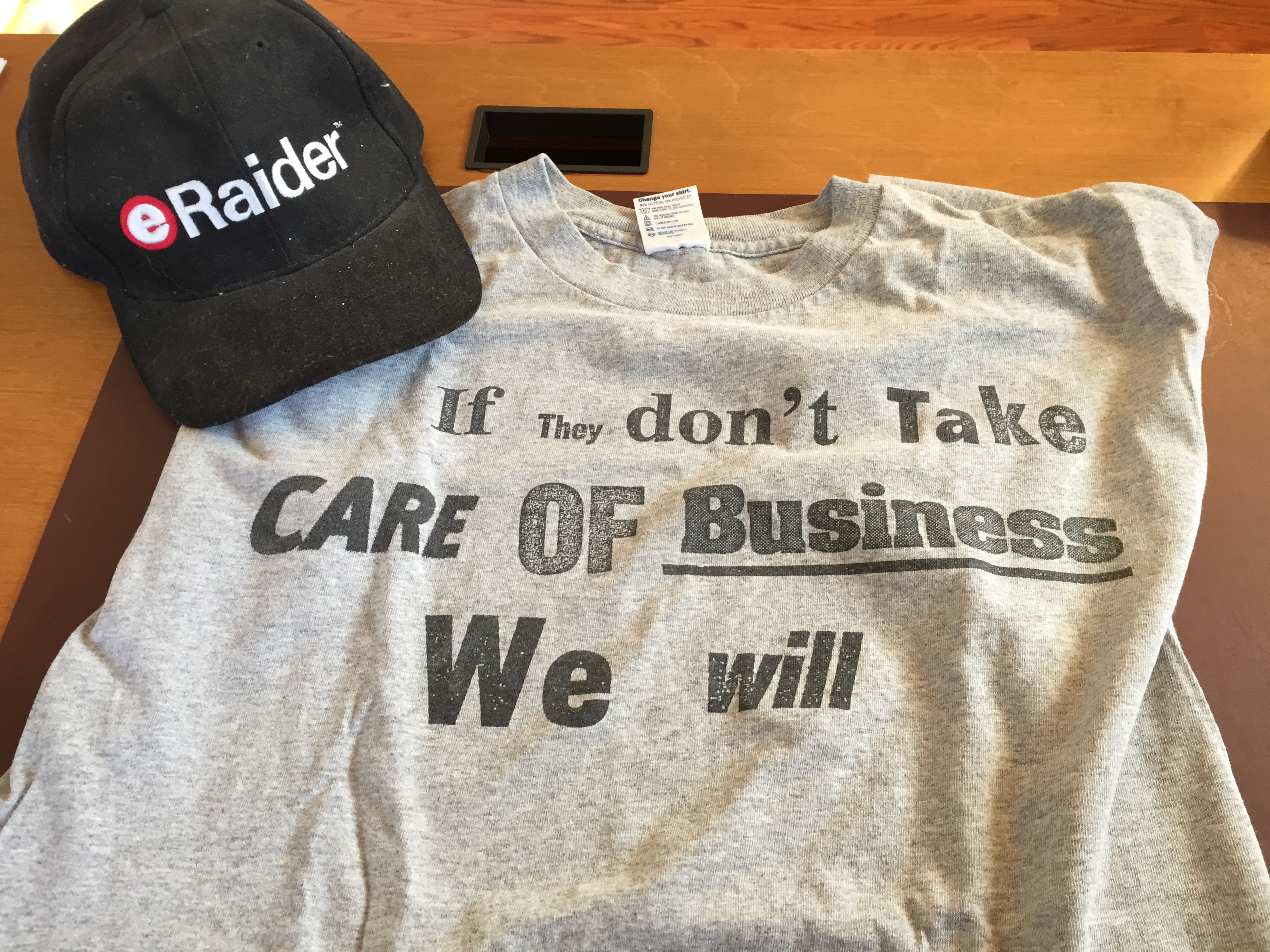
A while back, I blogged a “vote counting” story that involved eRaider, a widely-media covered fund during the Internet boom in ’90s that hoped to cash in on “message board” activism. eRaider’s business model was to buy a 5% stake in small companies with good products, then get shareholders together to push for governance changes that would improve the company. The idea got a lot of publicity – but little “real life” traction and eRaider shut down in 2004.
Anyway, Lois Yurow sent in this pic of her vintage swag!
Over a decade ago, this is what our HQ looked like with the storage of many extra copies of “The Corporate Counsel” & “The Corporate Executive” print newsletters – various editions that spanned decades. Back then, we kept extra copies of back issues for when subscribers called in a panic because they lost their copy. So this is sort of what our “factory” looked like:
PCAOB Staff Guidance: Deeper Dive into CAM Communcations
Last week, the PCAOB Staff issued this 4-pages of guidance on CAMs. See this blog by Mike Gettelman – and this blog by Steve Quinlivan…
– The Culture of Counterparties
– Cross-Border Carve-Out Transactions: Conditions & Staggered Closings
– California Consumer Privacy Act and Its Impact on M&A Transactions
– The Millenials Strike Back: 29 Tips for Older Deal Lawyers
Remember that – as a “thank you” to those that subscribe to both DealLawyers.com & our Deal Lawyers print newsletter – we are making all issues of the Deal Lawyers print newsletter available online. There is a big blue tab called “Back Issues” near the top of DealLawyers.com – 2nd from the end of the row of tabs. This tab leads to all of our issues, including the most recent one.
And a bonus is that even if only one person in your firm is a subscriber to the Deal Lawyers print newsletter, anyone who has access to DealLawyers.com will be able to gain access to the Deal Lawyers print newsletter. For example, if your firm has a firmwide license to DealLawyers.com – and only one person subscribes to the print newsletter – everybody in your firm will be able to access the online issues of the print newsletter. That is real value. Here are FAQs about the Deal Lawyers print newsletter including how to access the issues online.
With summer now upon us – boy, the year is moving fast – I thought I would bring something nice & light into your day: “Three Little Birds“…
Don’t worry about a thing
‘Cause every little thing gonna be all right
Singin’: “Don’t worry about a thing
‘Cause every little thing gonna be all right
Rise up this mornin’
Smile with the risin’ sun
Three little birds
Pitch by my doorstep
Singin’ sweet songs
Of melodies pure and true
Sayin’, this is my message to you-ou-ou
In this article, the WSJ says big tech has “arrived” because Amazon, Google and Facebook had so many shareholder proposals this season – 12, 13, 8, respectively. But I think protesting poop emojis are a truer sign…
Amazon’s Annual Meeting: Dancing Emojis!
I feel that I would not be doing my job if I didn’t tell you that there were dancing poop emojis outside of Amazon’s annual meeting. Or maybe I had to mention it because I’m so proud of my younger son – who graduates from UCLA next month – for landing an engineering gig at Amazon in the fall. My older son is at Google, working on the “Stadia” project. I’m a proud papa. Did you know that some Google offices have fire poles to get between floors…
Conference Pointers: Quite Literally
I’ve done some silly stuff over the years when I’ve spoken at conferences to keep the audience engaged – often I pick up some cool swag in the exhibit hall & throw it out to the audience at the midpoint of the panel (eg. nerf footballs). Here’s one of those moments from a dozen years ago at the Society of Corporate Secretaries’ annual conference:
Over on the “Mentor Blog,” I recently blogged about how to handle a director who wanted to take notes at a board meeting. Jon Cohen of Snell & Wilmer had this awesome response to my post: “I had a ‘discussion’ with a director of a client who insisted on taking, and retaining, detailed notes of board meetings. When he couldn’t be easily dissuaded, I offered him this custom-made note pad. After that, we had a much better discussion.”
In the March-April issue of “The Corporate Counsel” print newsletter – which was mailed a few months ago – check out our own analysis of note-taking during board meetings, as well as our comprehensive analysis of board minutes & resolutions…
“Celebrity” Directors: Sometimes Not a Good Thing
Recently, I blogged about how Shaq should be considered a legitimate director despite his celebrity status. I was reminded by some members that sometimes a celebrity director is not that hot an idea. Here’s one story that a member sent in:
We had a client about twenty years ago whose CEO was a buddy of a former NFL player and they put him on the board. This ex-NFL guy wasn’t the sharpest knife in the drawer. To make a long story short, the poopy hit the proverbial fan with the company, with all sorts of potential for people to second-guess board decisions. It’s at this point that the ex-NFL guy is talking to one of my partners and says, “Boy, I’m glad I’m only a celebrity director. The real directors are in a tough spot here, aren’t they?” My colleague broke it to him gently.
Happy Anniversary Baby! 17 Years of Blogging & Counting
A few weeks ago marked my 17th anniversary – 17 years! – of my blither & bother on this blog (note the “DealLawyers.com Blog” is nearly 16 years old – not shabby!).
It’s the one time of year that I feel entitled to toot my own horn – as it takes stamina & boldness to blog for so long. A hearty “thanks” to all those that read this blog for putting up with my personality. As I was one of the first lawyers to blog, my track record is amongst the longest as a blogger – lawyer or otherwise…
And “double thanks” for John & Liz joining our team a few years ago. It’s been great to have such wonderful people to work with – and they certainly can blog as well as me, or anyone else out there!
Yesterday, SEC Chair Clayton issued this statement indicating that a roundtable on short- and long-term management of companies will be forthcoming. The date & agenda are not yet known. This follows the SEC’s “request for comment” in December about the nature, content and timing of earnings releases & quarterly reports…
By the way, Chair Clayton will also host a roundtable of former SEC Chairs during the SEC’s 85th anniversary “program & dinner” coming up on June 3rd. This kind of roundtable normally would be fascinating, but I think a lot of alumni are going to that thing to catch up with each other & won’t be too interested in programming. But what do I know…
The SEC is Questioned Over Lag Bringing Volkswagen Case
A federal judge sharply questioned why securities regulators took so long to sue Volkswagen AG over its bond offerings, years after other government agencies resolved litigation over the auto maker’s diesel-cheating scandal. U.S. District Judge Charles Breyer on Friday suggested the SEC’s March 2019 lawsuit makes it look like a “carrion hawk that simply descends when everything is all over and sees what it can get from the defendant,” according to a transcript provided to The Wall Street Journal.
The judge also ordered the SEC to provide a timeline on when it learned of each fact behind its case — and explain its legal reasoning behind waiting to file the suit—before he would let the case move forward.
Wall Street watchdogs often tout the fines they levy on alleged wrongdoers. Yet much of that money is never collected. The SEC over the five years ending in 2018 took in 55% of the $20 billion in enforcement fines set through settlements or court judgments, according to agency statistics. During the prior five years, from 2009 through 2013, the SEC collected on 60% of $14.6 billion.
And in 2018, the commission collected just 28% of almost $4 billion. That rate—the lowest in a decade—was due in part to an unusual $1.7 billion settlement with the Brazilian oil company Petrobras that may never require payment to the SEC. The SEC has struggled for years to get defendants to pay more of their fines, although some are almost certain to avoid payment forever. That includes people who went to prison on related criminal charges, or people behind Ponzi schemes who spent the funds they took from defrauded investors.
Meanwhile, this study shows that the SEC’s enforcement actions against companies remain at near-record levels despite the government shutdown…
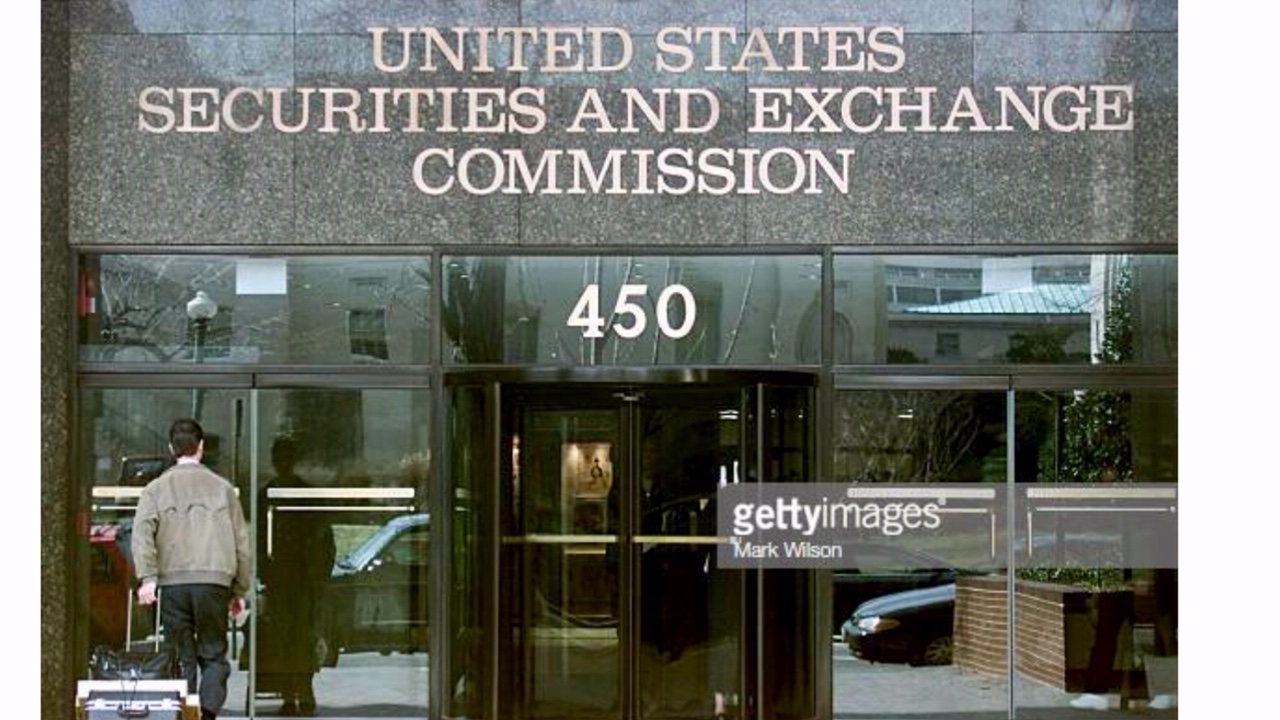
In my self-anointed role as “keeper of the weird” for some of the notables related to the SEC, it’s high time that I share this story. When the SEC announced – fifteen years ago – that it was moving its headquarters from 450 Fifth Street to 100 F Street, I got sentimental & started to inquire about what would happen to the massive letters that comprised the main signage above the entrance of the old HQ. Somehow I reached a facilities person that was the guy for this purpose.
I sent him an email asking whether I could obtain the letters when they were taken down. As you can see from this picture, there were 43 letters bolted into the wall – I was gonna distribute a letter to each of my friends that had worked at the agency with me:
I was surprised when I soon heard back that I would indeed be receiving the letters when they came down. Joy! A few months later, I knew the SEC’s move was complete & the letters had come down. I emailed my guy. Nothing. Tried again a few weeks later. Radio silence. One last try. Nada. I gave up.
A few months later, I emailed the guy because I was feeling sadistic. Amazingly, the guy immediately responded that if I came down right away, he would be happy to share. I was on the way! When I got there, I didn’t receive all 43 letters – but I did receive this nice collection:
So I got that going for me. Since the letters were attached to marble tile, the mounting bolts are four inches long. As Warren Buffett once responded to me when I asked him to speak at our executive pay conference, “If you don’t ask, you don’t receive. And sometimes even if you ask, you still won’t receive.” In this case, I did indeed receive…
Warren Buffet Says Many “Independent Directors” Aren’t
Warren Buffett, the chairman and CEO of Berkshire Hathaway Inc. who’s known as the Oracle of Omaha, slammed independent directors for being too focused on their paychecks, and not on keeping the CEO in check. “You don’t get invited to be on boards if you belch too often at the dinner table,” Buffett said at the company’s annual meeting in Omaha, Neb.
“I’ve been on 20 public company boards; I’ve seen a lot of corporate boards operate. The independent directors, in many cases, are the least independent,” he explained. If directors get about $250,000 a year, and that’s an important part of their income, he added, “they’re not going to upset the apple cart.” The incentive for those directors, he continued, is to go along with the CEO. That way, if the CEO of another company calls about that director, he or she will be described as having never raised any problems. “How independent is that?”
Also see John’s blog about Delaware’s Chief Justice Leo Strine thoughts on the role of independent directors…