A member took me up on my offer yesterday to inform us if more than one company has a fee-shifting bylaw. Laura Householder of Drinker Biddle did some digging and found that LGL Group has this fee-shifting bylaw. Let me know if you find others…and check out Keith Bishop’s blog entitled “If Fee-Shifting Bylaws Are Ever Put On Trial, This Case Should Be Exhibit A.”
MSCI Acquires GMI
Last week, MSCI announced that it is acquiring GMI, the governance ratings service that had acquired The Corporate Library a few years back. And MSCI had acquired ISS a while ago and sold that earlier this year. Although on their face GMI and ISS may seem like they are in the same business, there are important distinctions – the primary one being that ISS is a proxy advisor and GMI is not…
In this 13-minute podcast, Ning Chiu of Davis Polk & I dig into the SEC Staff’s new proxy advisor guidance, as well as recap remarks that Corp Fin Director Keith Higgins recently made at the Society of Corporate Secretary’s annual conference, including:
– Pay ratio & other outstanding Dodd-Frank rulemakings
– Disclosure effectiveness reform
– Shareholder proposals & recent Rule 14a-8 constituents meeting
– Interim vote tally reports from Broadridge
– Proxy advisor guidance – Staff Legal Bulletin No. 20
– Conflict minerals & a possible future Staff review project
This excerpt from the Kaye Scholer memo penned by Nicholas O’Keefe reflects some of the comments that Ning & I made:
SLB No. 20 is merely interpretative relief under existing rules and falls far short of the more comprehensive rulemaking that many in the issuer community advocated. Given the SEC’s current workload, comprehensive reform so soon after the roundtable was never a realistic possibility. The SEC stated that it expects investment advisors and proxy advisory firms to conform their systems and processes in advance of next year’s proxy season. The 2015 proxy season should therefore be an important test of the impact of SLB No. 20.
In his blog (and here’s his follow-up blog), Keith Bishop identifies the one company found to have adopted a fee-shifting bylaw. Let me know if you find others…
Sights of the Society of Corporate Secretaries Conference
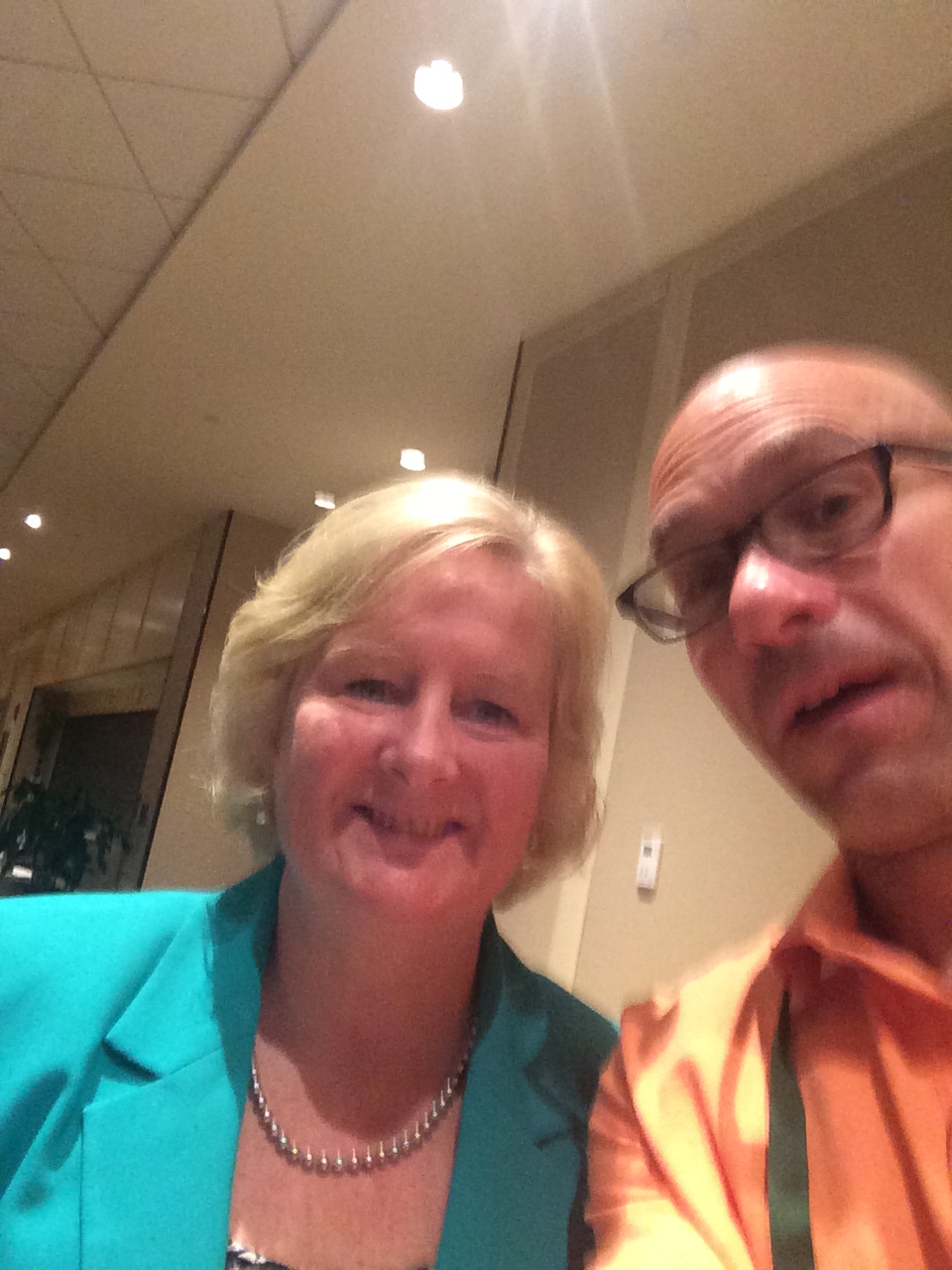
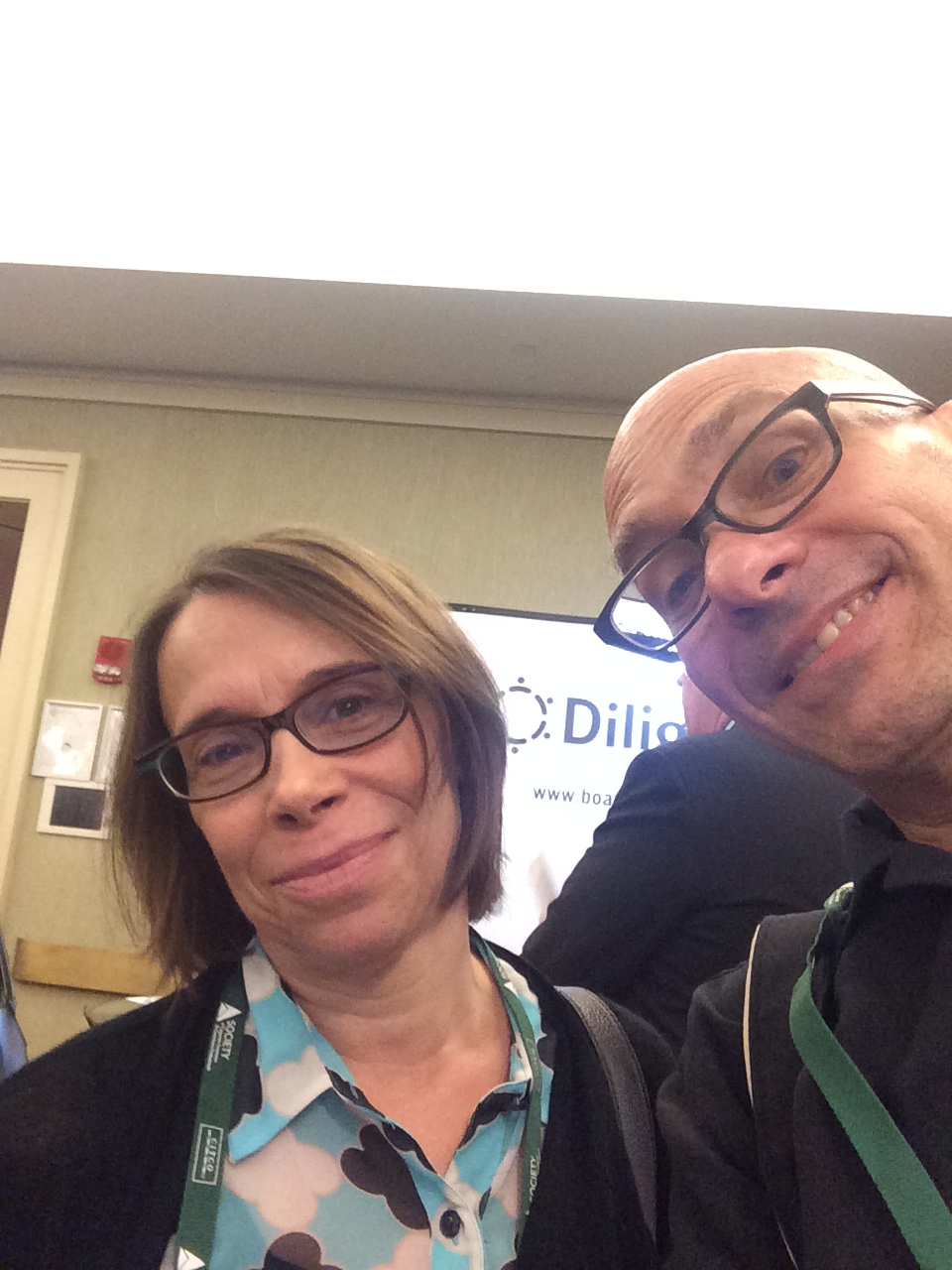
Heading into last week’s annual conference for the Society of Corporate Secretaries, I blogged about my video on “how to attend conferences” – and I said I would take my own advice and meet ten new people. Here are pics with some of the wonderful new people that I met:
Lauren Gojkovich of Goldman Sachs:
Aaron Briggs of General Electric:
Charles Rivers’ Matt Daniel & Paul Weiss’ Frances Mi:
Mary Francis of Chevron:
Judy McLevey, who just left the NYSE:
Intelligize’s Chris Walunas & Joanne Ferrara:
Wendy Fried of Addison:
Sara Brown of Ingersoll Rand:
Damien de Bruijn of Addison:
And I can’t help adding one with long-time friend Ginny Fogg of Norfolk Southern:
Four years after the SEC released its proxy plumbing concept release, the SEC Staff issued Staff Legal Bulletin #20 last night, which is in the format of 13 Q&As. The IM piece (Q&A #1-5) deals with the responsibilities of investment advisers to vote and hire proxy advisors. The Corp Fin piece (Q&A #6-13) deals with two exemptions from the proxy rules relied upon by proxy advisors. More to come tomorrow after the firm memos start rolling in. Thought this was gonna be a light week! And apparently so did everyone else because I haven’t seen any blog or law firm write this one up yet…
Internal Investigations: DC Circuit Restores Privilege Protections
In his blog, David Smyth lays out how the DC Circuit Court – In re: Kellogg Brown & Root – has overturned a lower court’s ruling to uphold the Upjohn principle that the attorney-client privilege protects confidential employee communications made during an internal investigation led by company lawyers. We are posting memos on this decision in our “Internal Investigations” Practice Area.
Our July Eminders is Posted!
We have posted the July issue of our complimentary monthly email newsletter. Sign up today to receive it by simply inputting your email address!
Last week, SIFMA issued guidance about a broker’s duty to verify accredited investors (backed by 20 law firms which are listed at the back). The guidance includes a form of a Rule 506(c) accredited investor questionnaire as well as a form of written confirmation. It could wind up being important if new Rule 506(c) offerings take off…
More on “The SEC’s First Whistleblower Retaliation Case”
Last week, I blogged some thoughts from DLA Piper’s Nick Morgan about the SEC’s first whistleblower retaliation case, including whether the SEC had the statutory authority to bring this case against Paradigm Capital Management. In this FEI blog, Sean McKessy, Chief of the SEC’s Whistleblower Office comments on the case, including responding to Nick’s comments. We’ve been posting memos on the case in our “Whistleblowers” Practice Area.
More on “The Mentor Blog”
We continue to post new items daily on our blog – “The Mentor Blog” – for TheCorporateCounsel.net members. Members can sign up to get that blog pushed out to them via email whenever there is a new entry by simply inputting their email address on the left side of that blog. Here are some of the latest entries:
– Controversy? FAF’s Contribution to the IASB (& the SEC’s Role In It)
– Campaigning to Be the Company’s Director Nominee: A New Trend?
– PCAOB Issues 2012 Grant Thornton and BDO Inspection Reports
– Microsoft: The Proper Way to Introduce a New CEO
– Select Board Diversity: Four Great Quotes
– Equidate: New Private Company Exchange With a Twist
Check out the GoPro roadshow on RetailRoadshow.com (the IPO priced on Wednesday night so it might be pulled down soon). Pretty remarkable, just like all their videos if you are familar with GoPro. 36 minutes of video and more. Nice memories for me as I worked on some of the no-action letters in the ’90s that allowed roadshows to be brought into the online age. Hat tip to WilmerHale’s David Westenberg for pointing it out!
Crowdfunding: A Pending Patent & More…
Sara Hanks recently tweeted this pending patent on crowdfunding. Interesting. And here’s more news on crowdfunding:
Printed: Morrison & Romanek’s “The Corporate Governance Treatise”
Wrapping up a project that Randi Morrison & Broc Romanek feverishly commenced two years ago, we are happy to say the inaugural 2014 Edition of Morrison & Romanek’s “The Corporate Governance Treatise” is done being printed (and the 1st printing already sold out – a second printing is now being done!). Here’s the “Table of Contents” listing the topics so you can get a sense of the Treatise’s practical nature.
You will want to order now that it’s done being printed. With over 900 pages — including 212 checklists — this tome is the definition of being practical. You can return it any time within the first year and get a full refund if you don’t find it of value.
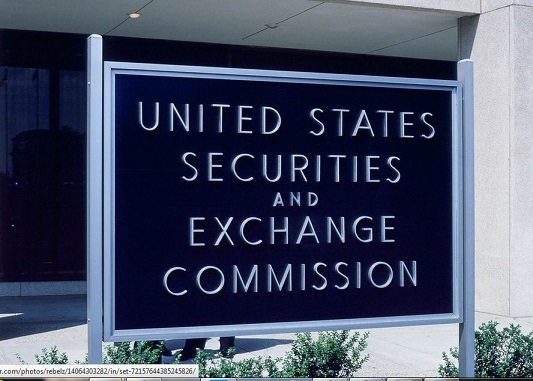
Thanks to Charles Leber, a former Corp Fin Staffer who took many pictures during his eras of serving on the Staff for making these pictures available on his Flickr page (email me if you want access to his entire collection). Even I don’t recognize many folks, but I do dig how people dressed and how the SEC’s building looked:
Don’t forget our own “Photo Gallery” on this site. And don’t forget our new free “Job Board” to post your open jobs or post your resume profile…
Farewell to Mickey Beach
I just recently found out that former Corp Fin Senior Associate Director Mickey Beach passed away a few years ago. I barely knew her – but I do know she was very kind and well-regarded by all, not to mention that she broke some glass ceilings at the SEC. She served in the SEC for over 30 years. Here’s her obituary. The funeral home’s guestbook is gone – but those who knew her can leave their remembrances and stories on this Facebook group entitled “Securities & Exchange Commission Memories” that I recently created…
SEC Proposes Big Hike for FOIA Request Fees
Recently, the SEC proposed changes to how FOIA request work to allow the Commission to collect fees that reflect its actual costs and add an appeals time frame. The current rates for FOIA request rates are $16/hour for grade 11 and below and $28/hour for grade 12 and above. The proposal would provide more flexibility for the SEC – a chart would be posted on the SEC’s site, but the guideline is the Staffer’s basic pay plus 16%. If the proposed hike was in effect today, the fees would be: SK-8 or below: $29/hour; SK-9 to 13: $61/hour; and SK-14 or above: $89/hour.
In his blog entitled “Notes From The 2114 Securities Law Conference,” Keith Bishop looks through the crystal ball to make fun of what the securities laws might look like in 100 years. Bear in mind while reading it that Milton V. Freeman was a lawyer who co-drafted Rule 10b-5 and Tommy Corcoran was the chief spokesman for the drafters of the ’34 Act who is credited with testifying that Section 16 was a “crude rule of thumb”…
I’m just loving this beautiful story from Suneela Jain of Cleary Gottlieb:
I spoke animatedly, my words pouring forth ever more quickly as I sought to provide my parents with yet another detail about corporate governance in the United States. We had long finished our breakfasts – down to the post-breakfast chips my dad always looks to as soon as he finishes his meal. We sat, as we always had, tucked around one end of the table. They listened to me with looks of concentration – whether interested in the subject matter or surprised at my apparent excitement about it, I was unsure.
The California kitchen table at my parents’ is far from the New York apartment my husband and I share. Over the last decade of law school and work, we had become accustomed to visiting California twice a year, each time in and out of our respective homes to visit friends. 2013 was different as, in March, my dad was diagnosed with an aggressive form of brain cancer. The world shifted. My trips quickly became more frequent.
Bringing the Outside In
The corporate governance chatter was a reflection of a project that Cleary Gottlieb, my law firm, had given me to accommodate my increased travel. The project was to work with a group from Cleary and The Conference Board to write a White Paper about the history of engagement between shareholders and corporations in the United States. I felt relieved to have the new bits of knowledge to share with my parents.
I have vivid memories of my dad emerging excitedly from his room after opening statements that showed that his stocks – the companies he had researched and then selected as good bets to build my parents’ savings – had done well. My dad, who came to the United States from India in his early 30s, was intensely proud of the career he built here – of his participation in the American system – and he loved to discuss and debate all topics about how it does or should work. My mom, a devoted environmentalist, was keenly interested in issues related to corporate responsibility.
And so, in place of the other topics that hovered in the air at our home, I told my parents what I was learning about the evolution of corporate governance in the United States. I told them about the legal framework that defined the roles of the board of directors, management and shareholders, and how changing norms and practices affected expectations about “shareholder democracy.” I told them about early “gadflies,” and how shareholder proposals targeted segregation of Greyhound buses and apartheid in South Africa. I talked to them about hedge fund activists. About the challenges posed by derivatives trading. About the theoretical roots of supporting a management-centric or shareholder-centric model of governance. About the challenge of really thinking about what “shareholder value” means.
It was a conversation in which my dad, historically, would have been an active participant. Instead, my voice prattled without challenge or interruption. After some time, my dad rubbed his eyes and said he needed to rest. My mom, running in so many directions and occupied with doing so many things, decided to do the same. I returned to the small desk in my childhood room to do my work; a heavy sadness having settled over me.
Honoring the Inside Out
A few hours later, as I had re-settled in my laptop and paper-dominated universe, I heard soft steps approach me and felt a hand on my back. I turned to see my dad, his brow furrowed. “But Suneela,” he said, “how do I vote?” I smiled, and we settled in for a new conversation.
My dad no longer receives the bulky proxy statements on which he would have marked his preferences for a board slate or a shareholder proposal. My parents’ carefully managed portfolio has long-since shifted to mutual funds and similar investments, and someone else is responsible for exercising the vote that their holdings represent.
When I think about corporate governance – when I think about the rules, regulations, pressures and norms that influence how and what decisions at corporations are made – I think about my parents. My parents are no longer “shareholders” in the traditional sense. My dad no longer revels in the fortunes of “his” companies. At the same time, their sense of security and well-being is intimately connected with the stock market and the companies that compose it.
When my parents married, my mom was a yoga teacher and my dad had only the orange robes for which he had little use as he decided to leave his life as a monk and start a life with my mom. The savings they have now reflect decades of hard work and careful financial management. They both believe strongly in a world that is managed with integrity, holds the possibility of opportunity for all, and honors and preserves the natural beauty in which they connect with their sense of gratitude – despite the uncertainty that each day can bring.
Working on the White Paper with the team at The Conference Board and my colleagues at Cleary exposed me to the thoughtful efforts among a number of attorneys, counsel, business leaders, board members, investors and academics, who make their livings as successful participants in the corporate arena, and also have a strong interest in improving it. They recognize the impact that public companies have on all facets of American life – on financial security, social cohesion, community development, our parks and forests – and they are interested in building a system that flourishes in the context of that impact, not despite it.
Their work is a challenge. It requires establishing a common vision and honesty about the challenges and uncertainties in achieving it. It requires time, respect and a willingness to make difficult decisions. It requires thinking about the system as a whole and its consequences and opportunities for the various social segments that contribute to and live at the effect of it.
I continue to engage in the corporate governance conversation because I have great hopes that the efforts of these people will achieve results. I have great hopes that the much-touted social entrepreneurship ethos of my generation will be backed by action that naturally builds trust and confidence in America’s business leaders. I believe there is tremendous space for talented business leaders to step up to a platform that recognizes and respects the intentions and the possibilities of our economic system. I know there are many who are eager to give them a lift, and at least two who would get great satisfaction simply from hearing stories about the possibilities revealed from the loftier view.
Transcript: “Big Changes Afoot: How to Handle a SEC Enforcement Inquiry Now”
We have posted the transcript for the recent webcast: “Big Changes Afoot: How to Handle a SEC Enforcement Inquiry Now.”
Thanks for the Gumball Mickey – Gunderson Dettmer, Redwood City
In this 20-second video, the fine lawyers at Gunderson Dettmer in Redwood City, CA pay homage to the old Hasbro TV commercial. This one is pretty funny…
Yesterday, the Supreme Court delivered the long-awaited opinion in Halliburton v. Erica P. John Fund. We have started posting the hordes of memos in our “Securities Litigation” Practice Area, but here’s analysis from Skadden:
The Supreme Court of the United States today in Halliburton Co. v. Erica P. John Fund upheld the fraud-on-the-market presumption of reliance first recognized by the Court in Basic v. Levinson, but gave defendants a new tool for challenging class certification in fraud-on-the-market cases. The Court held that defendants may introduce evidence of lack of price impact at the class certification stage in order to rebut the presumption of market efficiency. Justice Roberts delivered the opinion of the Court, joined by Justices Kennedy, Ginsburg, Breyer, Sotomayor and Kagan. Justice Thomas filed an opinion concurring in the judgment, in which Justices Scalia and Alito joined.
Basic opened the door to securities class action litigation by holding that plaintiffs are entitled to a class-wide presumption of reliance if the securities at issue were traded in an efficient market, and thus the alleged misrepresentations were analyzed by the market and reflected by the market price. In the absence of the presumption of reliance, plaintiffs would be required to demonstrate “eyeball reliance” on each alleged misrepresentation on an investor-by-investor basis, effectively precluding class treatment.
The Court today upheld the fraud-on-the-market presumption of reliance, but held that defendants must be afforded an opportunity before class certification to defeat the presumption through evidence that an alleged misrepresentation did not actually affect the market price of the stock. Defendants may seek to defeat the Basic presumption through direct, as well as indirect, price impact evidence. Thus, the Court vacated the Fifth Circuit’s decision that evidence of price impact could not be introduced at the class certification stage and remanded for further proceedings. The decision today gives defendants a potentially powerful new tool for challenging the use of Basic’s presumption of reliance at the class certification stage.
Here’s an academic debate on the issue of third-parties paying director compensation…
Society of Corporate Secretaries Annual Conference: How to Attend
Like last year, I will be taking “selfies” with 10 new folks I meet at this year’s annual conference in Boston for the Society of Corporate Secretaries. And it’s a good reminder to view this 2-minute video with my tips about how to get the most out of attending a conference:
As noted in this WSJ article and NY Times article, the DOJ and SEC have sent subpoenas to Rep. David Camp, Chair of the House Ways & Means Committee, and Congressional Staffer Brian Sutter, regarding whether they tipped traders about a change in health care policy in the wake of a long-running investigation. And on Friday, as noted in this WSJ article, the SEC filed a lawsuit in the Southern District of New York seeking to compel the subpoenas. Possible grand jury to follow.
Here’s an excerpt from David Smyth’s blog about the case:
This is fascinating to me for so many reasons, among them: (1) the potential Constitutional cluster we’re about to witness; (2) the real test this poses for the recently passed STOCK Act’s effectiveness; and (3) another example of Mary Jo White’s severe distaste for those who defy Commission subpoenas.
And here’s an excerpt from the latest WSJ article:
“It’s not unheard of for an agency to serve a subpoena to Congress, but for an agency to sue is—if not unprecedented—at least very rare,” said Michael Stern, who was senior counsel to the U.S. House from 1996 to 2004. “It shows that there is a serious conflict; the SEC really wants the information and the House really wants it protected,” he said.
Conflict Minerals: Are the Form SDs “Working”?
Recently, I blogged that perhaps no one would read all the Form SDs being filed except compliance people like ourselves. But I haven’t focused on how the disclosure in the reports might change corporate behavior – as I’ve been focused on the immaterial nature of them like everyone else in our profession. But as noted by Steve Quinlivan in his blog, a report issued by the “Enough Project” indicates market changes spurred by this Dodd-Frank provision have helped to significantly reduce the involvement of armed groups in eastern Democratic Republic of Congo in the mines of three out of the four conflict minerals. That certainly is good news!
More on Rule 506 Bad Actor Waivers
I’ve blogged several times about the SEC’s evolving policy on Rule 506 Bad Actor waivers as the Commissioners duke it out. The latest is this Reuters article entitled “SEC alters waiver policy to remove ‘too big to fail’ concern.” Here’s an excerpt:
In an interview with Reuters, SEC Republican Commissioner Michael Piwowar said he convinced the agency to alter the language in April after he threatened to vote against approving a waiver for the Royal Bank of Scotland Group Plc.The bank had requested the waiver to retain certain regulatory privileges, some of which make it easier for companies to raise capital, after one of its units struck a criminal plea deal in connection with the Libor bench mark interest rate manipulation case. But Piwowar said he feared voting to approve it without first changing the policy language could lead the market to believe the bank was too big to fail.
That is because the policy originally called for the SEC to consider a company’s “significance to the markets and its connectedness to other market participants” as a factor when deciding whether to deny a waiver. The SEC quietly made the change he requested on April 24.
And in her blog, Vanessa Schoenthaler notes that Senator Sherrod Brown (D-Ohio), Chair of the Banking Subcommittee on Financial Institutions and Consumer Protection, recently wrote a letter to Chair White questioning the Commission’s practices and procedures related to waiver of the automatic disqualification provisions…
Last month, I blogged about how the Delaware legislature was barreling towards passing legislation to reverse the impact of the ATP Tour v. Deutscher Tennis Bund decision. In the wake of this Delaware Senate resolution, here’s comes news from this WSJ blog:
Score this round for the U.S. Chamber of Commerce. The group representing business interests has won, at least for now, a fight in the Delaware legislature over whether companies can foist their legal bills onto shareholders who sue them and lose.
The Delaware legislature has postponed until early 2015 discussion of a proposed bill that had drawn heat from the Chamber, among others, the bill’s sponsor confirmed Wednesday. The bill would have banned companies from shifting the costs of losing cases onto the stockholders who bring them. “I certainly believe that we should not permit companies carte blanche to adopt these kinds of bylaws,” Sen. Bryan Townsend, who sponsored the bill, said in an interview. “But we have heard from a broad group of stakeholders and thought it best to take the coming months to continue our examination of the issue.”
The fight bubbled up after Delaware Supreme Court ruling last month that upheld a fee-shifting bylaw adopted by a private company, ATP Tour Inc. Some corporate lawyers said the ruling might open the door to public companies adopting similar “loser pays” provisions in an effort to deter shareholder litigation, which has skyrocketed in recent years. Such cases are now nearly automatic after the announcement of a merger, and rarely result in substantial gains for shareholders.
A section of the state bar quickly crafted legislation to ban companies from adopting such bylaws, and presented the measure to the legislature, which had been set to vote last week. But the Chamber opposed the bill, which it said “takes away a new tool … [that] businesses could use to reduce the amount of unnecessary litigation that accompanies corporate mergers,” according to a letter sent to Mr. Townsend June 5 and reviewed by The Wall Street Journal.
Others joined the fray. Dole Foods Co. also sent a letter to Mr. Townsend, the News Journal has reported. And more quietly, E. I. du Pont Nemours & Co., one of Delaware’s biggest and most influential companies, has quietly lobbied against the legislation, according to people familiar with its efforts. A DuPont spokesman confirmed that the company opposes the bill, but declined to comment further. DuPont’s intervention likely carried considerable weight in Delaware, where it was founded in 1802 as a gunpowder maker along the banks of the Brandywine Creek. It is the only Fortune 250 company based in the state, despite the dozens that claim it as their legal home, and its name is plastered around Wilmington, where its headquarters take up an entire city block.
XBRL Filings: 8-12% Contain Errors!
Here’s an excerpt from this piece by Compliance Week:
Calcbench, a technology firm promoting XBRL, says 8 to 12 percent of all filings provide the wrong scale for a number – such as reporting a number as 15 when the correct figure is 15,000. That mistake was most common in the fourth quarter of 2012, when one in eight filings contained a scaling problem, the firm says. Scaling most often occurs in tags associated with shares, but “a non-trivial number of errors” also occur in areas that are watched closely by analysts and investors, like revenue, net income, and assets. “Errors in these accounts may cause potentially wrong investment recommendations and decisions which may lead to increased liability by filing firms,” the report says. That makes them a high priority for correction, according to Calcbench.
Even more common, says the report, are sign switches, a problem in 40 to 60 percent of filings over the period analyzed by the firm. Sign switches are not as right or wrong as scaling errors, the firm says, but they can be confusing. As an example, cost of goods sold might be presented as a negative number that is added to revenue, or as a positive number that is subtracted from revenue. The analysis also finds a correlation between the presence of sign switches and the average number of tags in a filing. “The more tags you use, the more likely you are to have a sign switch,” the report says.
Transcript: “Proxy Season Post-Mortem: The Latest Compensation Disclosures”
We have posted the transcript for the recent CompensationStandards.com webcast: “Proxy Season Post-Mortem: The Latest Compensation Disclosures.”