
August 13, 2026
Equity Offerings: Understanding ATMs, Registered Directs, and Debt-for-Equity Exchanges
As I recently shared in this Cooley CapitalXchange blog, the market seems to be receptive to a variety of types of securities offerings right now. That’s a good thing for highly levered companies, as this Weil alert notes:
A wave of near-term debt maturities, persistent covenant pressure, and a financing market that rewards speed and certainty over marketed processes have pushed balance sheet management to the top of the agenda for management and boards of highly levered companies. For companies navigating this environment, the equity capital markets offer a variety of means of raising new capital, including some effective but less frequently used alternatives. Used deliberately, they are balance sheet management tools in their own right, capable of improving liquidity, reducing leverage and strengthening a company’s position in creditor negotiations.
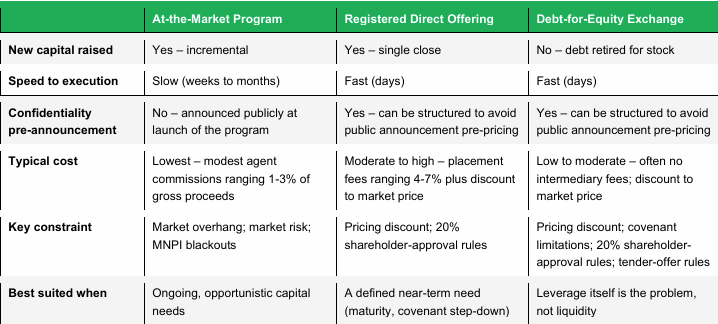
Three equity financing techniques are particularly well suited to these objectives, each addressing a different balance sheet need. At-the-market programs (ATMs) provide flexibility and low cost of capital, allowing companies to raise capital incrementally over time at prevailing market prices. Registered direct offerings trade some of that pricing efficiency for confidentiality and execution certainty, raising committed capital in a single negotiated transaction with terms that can be agreed upon before any public announcement. Debt-for-equity exchanges reduce leverage directly, retiring outstanding debt without requiring new cash. Together, these tools give public companies a range of options for managing liquidity, leverage and refinancing risk as financing needs evolve.
The alert points out that preparation is key: To use these alternative offerings effectively, companies need to understand their advantages and limitations ahead of time. The Weil team walks through that in detail in the memo for each alternative – and provides this handy chart to summarize key tradeoffs:
The alert also discusses how the SEC’s currently proposed changes to the shelf registration framework would affect companies’ access to capital. We’re continuing to post memos about the SEC’s proposal in our “Shelf Registration” Practice Area.
– Liz Dunshee
Blog Preferences: Subscribe, unsubscribe, or change the frequency of email notifications for this blog.
UPDATE EMAIL PREFERENCESTry Out The Full Member Experience: Not a member of TheCorporateCounsel.net? Start a free trial to explore the benefits of membership.
START MY FREE TRIAL